


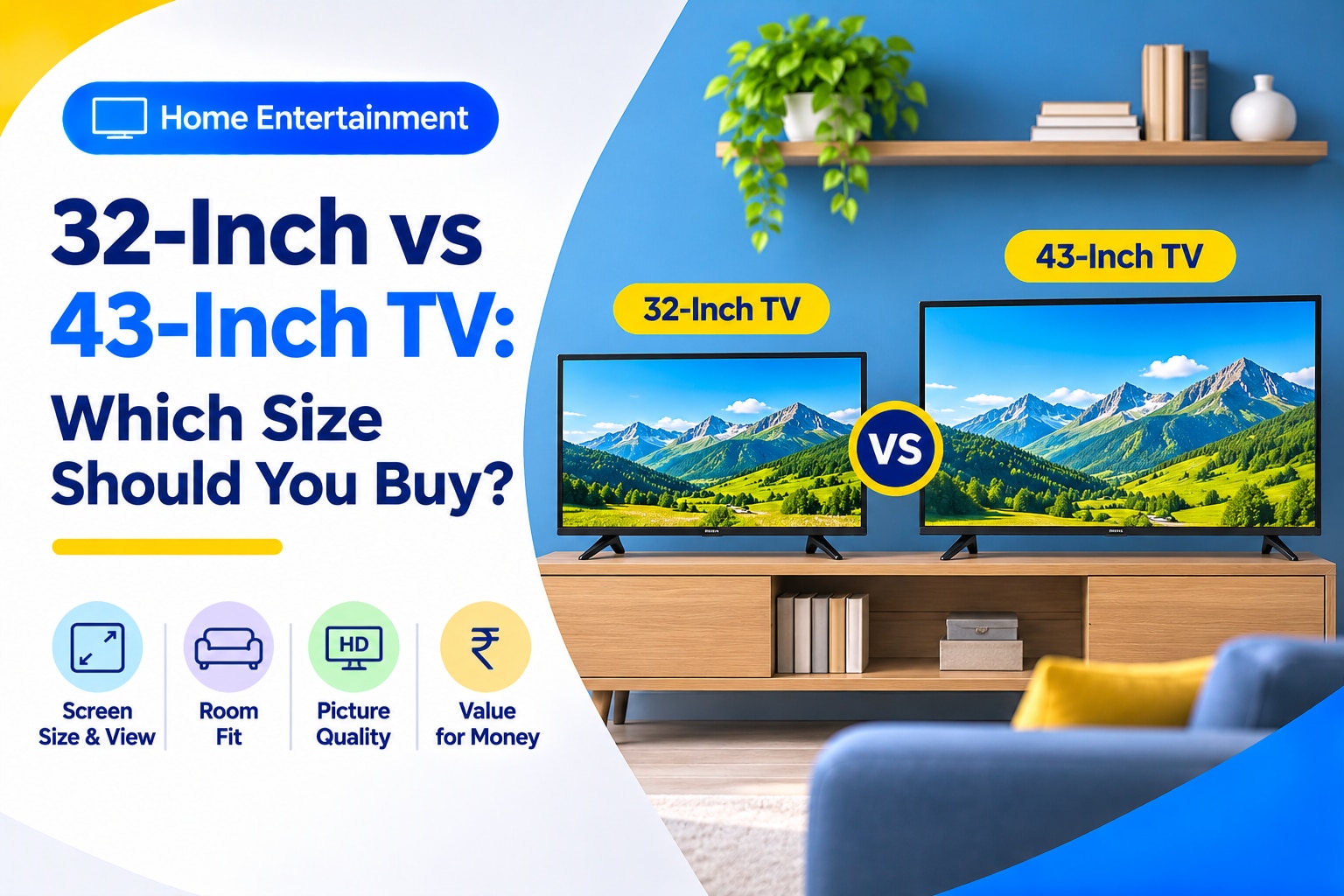
Quick Overview
- A 32-inch TV works well in compact rooms where you're sitting roughly 4-6 feet away.
- A 43-inch TV suits medium-sized rooms with a viewing distance of about 6-8 feet.
- 43-inch models are more likely to come with 4K resolution, while 32-inch TVs usually stick to HD Ready or Full HD.
- Bigger 43-inch screens tend to pack more HDMI ports and beefier processors, which can make smart TV performance smoother.
- Go with your room size and seating distance as the deciding factor: not just "bigger is better".
32 Inch Vs 43 Inch TV: Key Differences At A Glance

Choosing between a 32-inch and a 43-inch TV feels like a minor decision: until you get the wrong size for your home and realise it's either swallowing up your bedroom wall or looking lost in your living room. I've made that mistake once, with a screen that was way too big for a small study, and trust me, it's not a mistake you want to make twice.
The main difference comes down to screen size and how far away you sit. A 32-inch panel measures about 81 cm diagonally, while a 43-inch screen comes in at around 109 cm: nearly 35% bigger diagonally, which translates into a much bigger jump in actual viewing area than the numbers alone suggest. Beyond size, the two also differ in resolution, processing power, and just how immersive the whole viewing experience feels.
32 Inch Vs 43 Inch TV: Size And Viewing Distance
Screen size largely dictates how far back you should sit, and that's where this comparison really matters. A 32-inch TV is best watched from about 4-6 feet away, making it a natural fit for smaller spaces where seating is close to the wall anyway. A 43-inch screen, on the other hand, does best at around 6-8 feet, giving your eyes enough breathing room to take in the bigger picture without straining.
Getting this distance right matters more than most people think: sit too close to a big screen, and you'll start noticing pixel structure or motion blur; sit too far from a small one and it just won't feel immersive.
Which TV Size Is Better For Small And Large Rooms?
For tighter spaces like bedrooms, kitchens, or study rooms, a 32-inch TV fits in naturally without overwhelming the wall. Models like the TCL 32V4C QLED Google TV or the Xiaomi G Series HD Ready QLED work well here, giving you a solid smart TV experience without needing much space.
Medium-sized living rooms and entertainment areas, on the other hand, are a much better match for a 43-inch screen. Panels like the LG NU870 4K Nanocell AI Smart TV or the Sony BRAVIA 2 4K Ultra HD Smart Google TV fill a larger wall, giving you an immersive picture that makes movie nights and sports feel like an event.
32 Inch Vs 43 Inch TV: Picture Quality And Resolution
On the resolution front, 32-inch models are usually HD Ready or Full HD, since the smaller screen keeps pixel density sharp without going 4K. Most 43-inch models, though, come in Full HD and 4K Ultra HD, and panels like the BPL 4K Ultra HD Smart GTV or the TCL 43T69D QLED Google TV show noticeably crisper detail thanks to the higher pixel count spread across the bigger panel.
The practical takeaway: for a 32-inch TV, HD Ready or Full HD is usually plenty given how close you'll typically sit, but a 43-inch screen genuinely benefits from 4K, especially if you're sitting in the 6-8 foot range.
Smart Features, Sound And Connectivity Compared
Both sizes now come with smart platforms built in as standard, whether that's Google TV, WebOS, Tizen, or Android TV. A 32-inch model like the LG WebOS Smart LED TV still gets you access to all the popular streaming apps and, on some models, voice assistant support too. That said, bigger 43-inch panels tend to pack in more capable hardware: faster processors, extra HDMI ports, richer audio processing, which adds up to smoother navigation and app switching overall.
On the connectivity side, most current models across both sizes come with multiple HDMI and USB ports, though 43-inch TVs more often give you three or more HDMI ports: handy if you're hooking up a soundbar, a gaming console, and a streaming stick all at once.
32 Inch Vs 43 Inch TV For Streaming And Gaming
For casual streaming in a smaller room, a 32-inch screen handles things just fine, especially for solo viewing or a bedroom setup. But if you stream a lot or game on a console, a 43-inch screen gives you a noticeably wider field of view and usually better HDR support, making fast-paced action or detailed game worlds more engaging. If gaming's a priority, look for HDMI 2.0 or higher and a stable refresh rate, especially on larger models.
32 Inch Vs 43 Inch TV: Price And Value For Money

Rather than getting caught up in exact numbers, it’s worth thinking about what each size really offers you.
- A 32-inch TV is great value if you want something compact and budget-friendly for a secondary room.
- A 43-inch TV costs more, but it usually earns that extra spend through better resolution options, more advanced smart features, and a genuinely more immersive experience, especially as your main living room screen.
When Should You Choose A 32 Inch TV?
Go for a 32-inch TV if you're setting up a bedroom, kitchen, study, or any compact space where you'll naturally sit within 6 feet. It's also a smart pick as a second TV if your household already has a bigger one in the main living area.
When Is A 43 Inch TV The Better Choice?
A 43-inch TV makes a lot more sense for medium-sized living rooms, especially if movies, sports, or console gaming are regular household activities. The bigger screen and generally stronger processing power create a more immersive experience when you're watching as a group.
32 Inch Or 43 Inch TV: Which One Should You Buy?
Choosing between a 32-inch or 43-inch TV really depends on measuring your room and seating distance first. Ask yourself: How far will you realistically sit from the screen, and is this TV going into a small personal space or a shared family room?
Conclusion: 32 Inch Vs 43 Inch TV - Which Size Makes More Sense?
There's no single right answer in the 32-inch vs 43-inch debate: it really depends on your room and how you watch TV. Smaller spaces and closer seating favour a 32-inch screen, while medium-sized rooms with more distance to work with make a 43-inch panel the better choice. Whichever you choose, matching the screen size to your room will always beat grabbing the biggest option on the shelf.