


Google Pixel 10 vs Samsung Galaxy S25: Key Differences
Content Team, Jio Mart • 21 Oct 2026
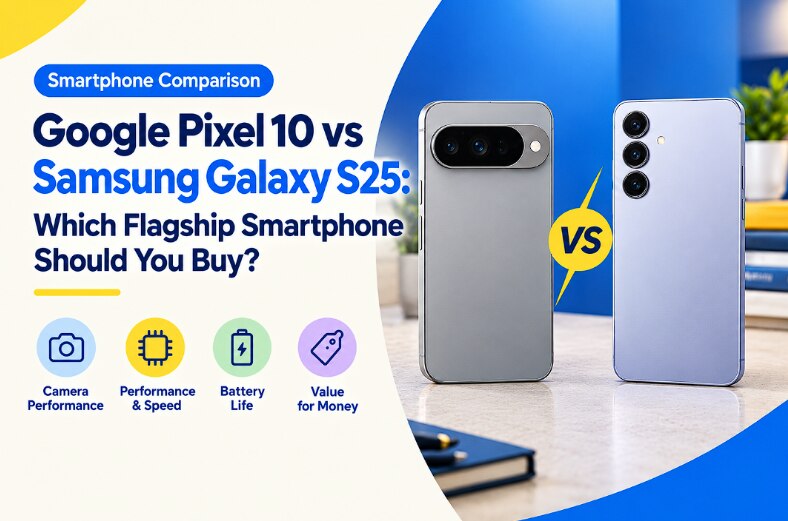
Quick Overview
- The Galaxy S25 wins on raw performance and gaming thanks to the Snapdragon 8 Elite chip
- The Pixel 10 offers stronger AI features that work on-device, even offline
- Camera styles differ: Pixel favours natural tones, Galaxy S25 favours punchier colours
- Google promises 7 years of OS updates, currently the longest in Android
- This Pixel 10 vs s25 comparison ultimately comes down to whether you prioritise AI or performance
Google Pixel 10 vs Samsung Galaxy S25: Complete Comparison
Both smartphones sit at the top of their respective lineups, but they take genuinely different approaches to what a flagship should be. Here's how they stack up on paper.
|
Specification |
Google Pixel 10 |
Samsung Galaxy S25 |
|
Display |
6.3" Actua OLED, 1080 x 2424, 60-120Hz |
6.2" Dynamic AMOLED 2X, 1080 x 2340, 120Hz |
|
Processor |
Google Tensor G5 |
Snapdragon 8 Elite for Galaxy (3nm) |
|
Rear Camera |
48MP wide + 13MP ultrawide + 10.8MP 5x telephoto |
50MP wide + 12MP ultrawide + 10MP 3x telephoto |
|
Battery |
4,970mAh, 30W wired, 15W Qi2 wireless |
4,000mAh, 25W wired, 15W wireless |
|
AI Features |
Gemini Nano, Gemini Live, Magic Cue, Circle to Search |
Galaxy AI suite with One UI integration |
|
Software |
Android 16, 7 years of OS updates |
Android 15 (One UI 7), multi-year upgrade support |
Google Pixel 10 vs Samsung Galaxy S25: Biggest Differences That Matter
Once you look past the spec sheet, the real differences start showing up in daily use. The Pixel 10 vs Galaxy S25 debate is ultimately about what Google and Samsung each prioritise: computational intelligence versus raw hardware muscle.
The Pixel 10 leans on its Tensor G5 chip mainly for AI processing, not benchmark scores. The Galaxy S25, on the other hand, runs on a Snapdragon 8 Elite chip that's genuinely one of the fastest mobile processors on the market right now. If you've ever felt a phone lag while multitasking, that difference becomes obvious fast.
Which Phone Is Better for Photography and Video?
- This is where things get interesting and, honestly, a bit personal depending on your shooting style.
- The Pixel 10's 48MP main sensor pairs with Google's computational photography, which tends to produce more natural skin tones and better dynamic range in tricky lighting
- Its 5x telephoto lens with Super Zoom up to 20x gives it a real edge for distance shots
- The Galaxy S25's 50MP main sensor captures slightly sharper daylight shots with punchier colours, which some people genuinely prefer
- For video, the Galaxy S25 supports 8K recording at 30fps, while the Pixel 10 tops out at 4K but adds features like Video Boost and Night Sight timelapse
I've noticed this pattern with most Pixel phones: the photos don't always look dramatic straight out of the camera, but they hold up incredibly well when you print or share them later. That consistency counts for a lot.
Which Phone Is Better for Gaming and Performance?
If gaming is a priority, the Galaxy S25 has a clear advantage here. The Snapdragon 8 Elite chip handles graphics-heavy titles with better sustained performance, and Samsung's larger vapour chamber cooling keeps thermal throttling in check during longer sessions.
The Pixel 10's Tensor G5 isn't built primarily for gaming benchmarks: it's optimised more for AI tasks and camera processing. It handles everyday apps and casual gaming just fine, but heavier titles will feel smoother on the Galaxy S25.
Which Phone Offers the Better AI and Software Experience?
Both phones are AI-first in their ways, but the execution differs quite a bit.
- The Pixel 10 runs Gemini Nano on-device, meaning a lot of its AI features: Magic Cue, Circle to Search, Call Assist: work without needing an internet connection. That's genuinely useful in areas with patchy connectivity, which is still common in parts of India.
- Samsung's Galaxy AI suite is deeply woven into One UI and includes live translation and photo editing tools, but some features still rely on cloud processing. Google also promises seven years of OS, security, and Pixel Drop updates, the longest support window in the Android space.
Which Phone Is Better for Everyday Use and Long-Term Value?
For daily use: texting, browsing, calls, casual photography: both phones perform reliably. The Pixel 10 is noticeably lighter at 204g and has a distinctly clean, minimal software experience without extra bloatware. The Galaxy S25 comes packed with more customisation options through One UI, which some users love, while others find it a bit cluttered.
The Pixel 10 has better battery life, with a larger 4,970mAh cell rated for 24+ hours of typical use. The Galaxy S25's 4,000mAh battery is smaller, though Samsung's efficiency tuning generally keeps it competitive through a full day.
Do you want a phone that just gets AI right without fuss? Or do you want raw power that handles everything you throw at it? That's really the question this comparison boils down to.
Conclusion: Google Pixel 10 or Samsung Galaxy S25, Which One Should You Choose?
There's no one "better" phone here: it depends entirely on what you value. If photography, on-device AI, and long-term software support matter most, the Pixel 10 is the stronger pick. If you want top-tier gaming performance, a proven camera system, and Samsung's mature software ecosystem, the Galaxy S25 makes more sense.
Either way, this Google Pixel 10 vs Samsung Galaxy S25 comparison shows both phones are genuinely capable flagships, just built with different priorities in mind. If you're browsing JioMart's smart buys section this month, it's worth handling both in person if you can, since screen size and camera style are things you really notice once you're actually using the phone daily.
FAQs
Is Google Pixel 10 better than S25?
It depends on your priorities. The Pixel 10 is better for AI features, camera consistency, and software longevity, while the Galaxy S25 offers stronger raw performance and gaming capability.
Is Pixel worth buying in India?
Yes, especially if you value Google's AI-first approach and want guaranteed long-term software updates. The Pixel 10's camera system is also well suited to varied Indian lighting conditions.
What are the key differences between the Pixel 10 and the Galaxy S25?
The main differences lie in processor choice, camera hardware, battery capacity, and how each brand approaches AI: Google focuses on on-device intelligence, while Samsung leans on raw processing power and a broader feature set.