


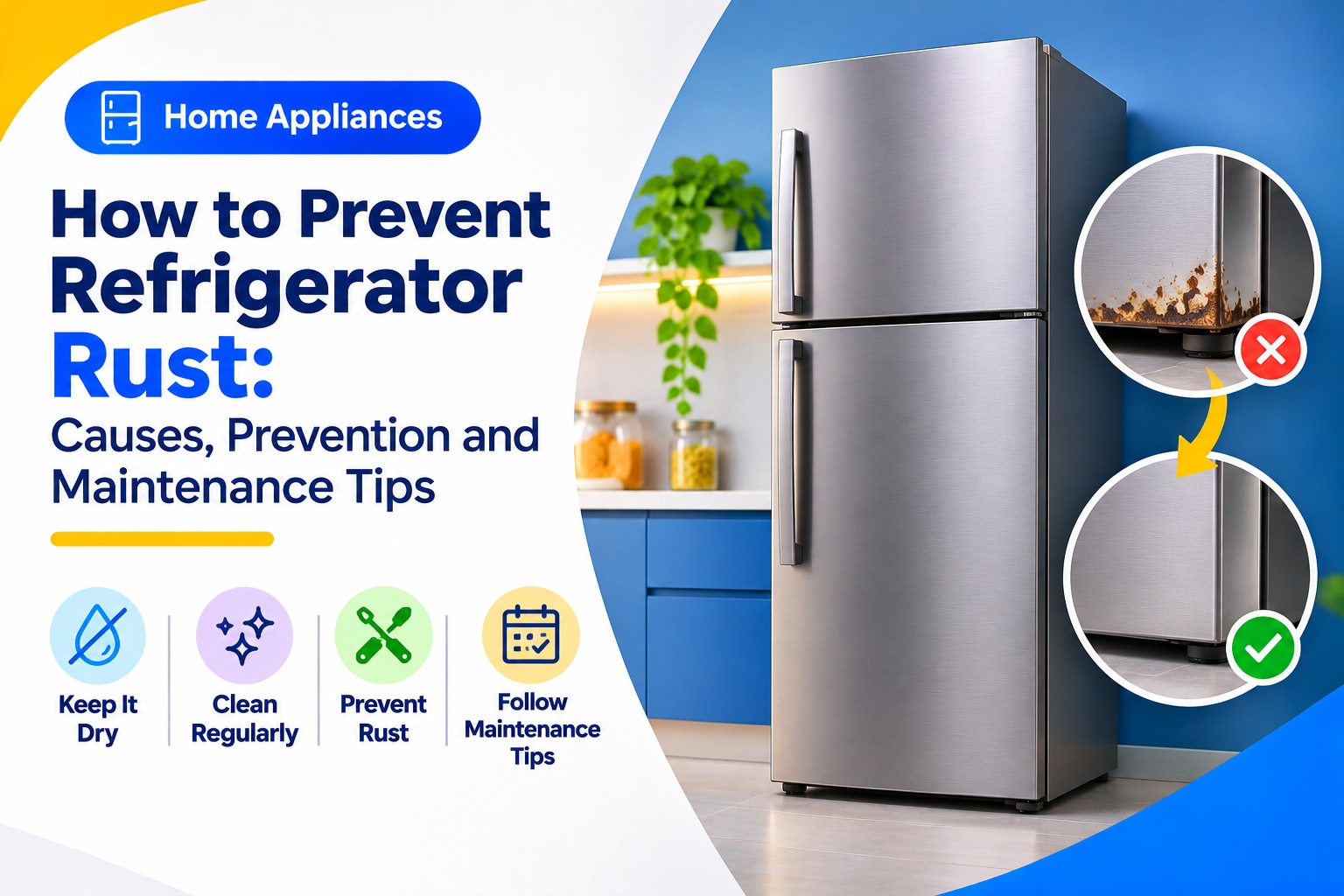
Quick Overview
- Refrigerator rust usually starts small: a chipped corner or a scratch before spreading if it's ignored.
- Moisture and condensation around door seals and the base are usually behind it.
- Light rust comes off with baking soda or vinegar; deeper rust needs sanding and a rust-inhibiting primer.
- Regular cleaning, dry surfaces, and good ventilation are the easiest ways to stop it before it starts.
Why Do Refrigerators Rust?

Refrigerators are built to keep moisture out, but that protective layer: whether enamel, paint, or a stainless finish: isn't invincible. Once it's scratched or chipped, bare metal is exposed to air and moisture, and refrigerator rust sets in fast. Condensation around the door seals and at the base is one of the biggest triggers, since standing water gives corrosion exactly what it needs.
Common Causes of Refrigerator Rust
A few everyday habits speed this up more than people realise.
- Chips and dings from moving items in and out of the fridge expose the metal beneath.
- Worn or cracked door gaskets let warm, humid air in, which condenses on cooler surfaces inside.
- Cleaning with abrasive scrubbers or harsh chemicals wears down the protective chromium layer on stainless steel, while kitchens with poor ventilation trap moisture against the fridge's exterior.
- Lower-grade steel, common in older or budget models, is also more prone to corrosion than galvanised or higher-grade stainless steel.
How to Remove Rust from a Refrigerator

Knowing “how to remove rust from refrigerator” surfaces depends on how far it's spread.
- For light surface spots, a paste of baking soda and water, left on for a few minutes and scrubbed with a soft cloth, usually lifts it without damaging the finish.
- For slightly tougher spots, soak a cloth in white vinegar, wrap it around the area, and leave it overnight to loosen the rust before gently scrubbing.
- Deeper rust needs more work: lightly sand the area to remove loose flakes, wipe it clean and dry, then apply a rust converter or primer before repainting with appliance-grade enamel.
- Let it dry for at least 24 hours before switching the fridge back on. This kind of refrigerator rust removal is straightforward with basic household tools, but catching it early always makes the job smaller.
How to Prevent Rust on Your Refrigerator
Protect the Refrigerator Surface from Scratches
Every scratch can be a starting point for refrigerator rust, so be careful when moving heavy items in and out or cleaning around hinges and handles. If you do notice a chip, a small dab of touch-up paint or a clear sealant applied quickly stops moisture from reaching the metal underneath before rust has a chance to form.
Maintain Proper Ventilation Around the Refrigerator
Good airflow around and behind the fridge reduces the condensation that drives most refrigerator rust. Leave a few centimetres of clearance from the wall, keep the kitchen reasonably ventilated, and check that the door seal forms a tight contact all the way around, since a warped or cracked gasket lets warm air in and moisture out where it shouldn't be.
Refrigerator Care and Maintenance Tips to Prevent Rust
A consistent refrigerator care and maintenance routine is the single best defence against rust returning.
- Wipe down the exterior and interior weekly with a damp cloth and mild detergent, then dry surfaces thoroughly rather than letting them air dry.
- Keep the fridge's optimal interior temperature below 40°F, since inconsistent cooling raises humidity and encourages condensation.
- In particularly humid climates, a small dehumidifier nearby can make a noticeable difference.
- Check door seals every few months for cracks, and replace them if they no longer sit flush.
- Avoid steel wool or bleach-based cleaners, which strip the protective coating faster than daily wear ever would.
Conclusion: Keeping Your Refrigerator Rust-Free
Refrigerator rust is almost always preventable once you know the causes. Moisture, chipped coatings, and worn seals do most of the damage over time, but regular cleaning and a quick check for scratches go a long way. Catch small spots early, keep the exterior dry, and your fridge should stay rust-free for years without needing a replacement.