


iPhone 18 Pro Variants: Storage Options and Pricing
Content Team, Jio Mart • 23 Oct 2026
Quick Overview
- The iPhone 18 Pro variants lineup launches across four familiar storage tiers, from 256GB up to 2TB
- The iPhone 18 Pro shares its chip and camera system with the iPhone 18 Pro Max, differing mainly in display size and battery capacity
- Storage choice, not the Pro vs Pro Max decision, is usually where buyers overspend unnecessarily
- Mark your calendar to pre-book the iPhone 18 Pro from September 12 at 5:30 PM, with sales and deliveries starting September 18 at 8:00 AM.
Choosing the right iPhone 18 Pro storage option matters as much as choosing between the Pro and Pro Max models. Choose the wrong storage tier, and you'll either overpay for space you never use or run short within a year.
What Do the iPhone 18 Pro Models Include?
Both the iPhone 18 Pro and iPhone 18 Pro Max share the same chip, camera hardware, and software features this generation. The only differences are physical size, battery capacity, and price, not raw capability.
iPhone 18 Pro vs Pro Max
The iPhone 18 Pro vs Pro Max decision is simpler than most buyers expect. Camera quality, chip performance, and software features are identical across both. The differences are display size, battery life, and how comfortably the phone fits in one hand.
iPhone 18 Pro Lineup at a Glance
Size Differences
The iPhone 18 Pro has a 6.3-inch (15.93 cm) Super Retina XDR display, smaller than the Pro Max's 6.9-inch (17.42 cm) screen. Both use ProMotion with adaptive refresh rates up to 120Hz. That smaller footprint on the Pro means easier one-handed use and better pocketability, at the cost of some screen real estate for video and gaming.
Camera and Battery Split
Camera hardware is genuinely identical across both models, so photo and video quality stay consistent whichever size you pick. Battery is where the split shows up: the Pro's more compact body means a smaller battery than the Pro Max, which itself offers up to 29 hours of typical use and up to 43 hours of video playback: four hours more than the iPhone 17 Pro. Both models support fast charging, reaching 50% in about 15 minutes with a compatible power adapter.
Who Should Buy Each Model?
Choose the standard Pro if one-handed use and pocketability matter most. Choose the Pro Max if screen real estate and maximum battery life are your priorities, particularly if you consume a lot of video or use your phone for extended gaming sessions.
iPhone 18 Pro Storage Options
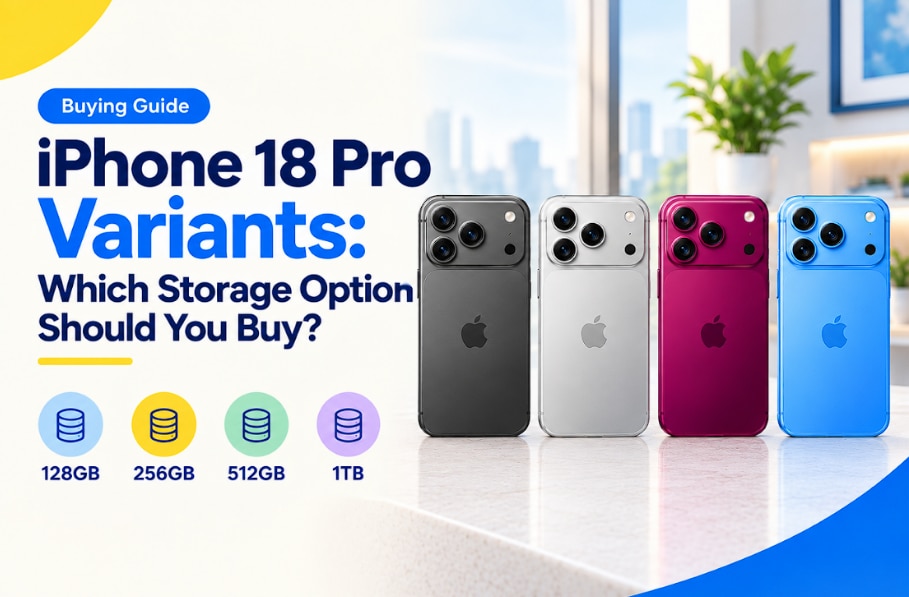
The iPhone 18 Pro continues Apple's familiar four-tier storage structure: 256GB, 512GB, 1TB, and 2TB. Each step doubles capacity and comes with a proportional price increase.
|
Storage |
Best suited for |
Price (India) |
|
256GB |
Light users, mostly photos and apps |
Rs. 1,64,900 |
|
512GB |
Heavy photo or video shooters |
Rs. 1,89,900 |
|
1TB |
4K/ProRes video creators, large app libraries |
Rs. 2,39,900 |
|
2TB |
Professionals shooting extensively in ProRAW or ProRes |
Rs. 3,14,900 |
Choosing the Right iPhone 18 Pro Storage
Best fit for everyday users
If you mostly use your phone for messaging, social media, and everyday photos, the iPhone 18 Pro 256GB variant comfortably covers a couple of years of use without forcing you to manage storage constantly.
Best fit for photo and video creators
The iPhone 18 Pro 512GB variant is the sweet spot for anyone who shoots frequently in 4K or keeps a large offline photo and music library. It's the tier most upgraders genuinely need without overspending on space they won't use.
Best fit for long-term buyers
The iPhone 18 Pro 1TB variant and the 2TB option exist for a smaller group: video professionals, ProRes shooters, or anyone who consistently fills storage fast. Unless you already know you need that much space, the extra cost is usually not worth it.
iPhone 18 Pro Price in India
The iPhone 18 Pro price in India starts at Rs. 1,64,900 for the 256GB model and rises by roughly Rs. 25,000 to Rs. 75,000 as you move up through 512GB, 1TB and 2TB, topping out at Rs. 3,14,900. Opting for the Pro Max adds roughly Rs. 15,000 over the equivalent Pro storage tier at every step.
Conclusion
For most buyers, the 512GB variant remains the smartest iPhone 18 Pro variant choice, covering years of photos, apps, and video without forcing constant storage management. Between the Pro and Pro Max, the decision comes down to display size and battery preference, not camera or performance differences.
If you're a professional creator working in ProRes or ProRAW daily, 1TB or 2TB earns its higher price. For everyone else, spending less on storage and more on peace of mind around everyday performance makes more practical sense.
FAQs
What storage options does the iPhone 18 Pro have?
The iPhone 18 Pro comes in four storage tiers: 256GB, 512GB, 1TB, and 2TB, matching the same structure Apple has used across recent Pro generations.
What is the iPhone 18 Pro price in India?
Pricing varies by storage tier, starting at Rs. 1,64,900 for 256GB and rising to Rs. 3,14,900 for the top 2TB configuration.
Which iPhone 18 Pro model is best for content creators?
512GB suits most content creators comfortably, while 1TB or 2TB better serves those shooting extensively in 4K, ProRes, or ProRAW formats on a regular basis.