


Pixel 10 vs iPhone 16: Key Differences Compared
Content Team, JioMart • 21 Oct 2026
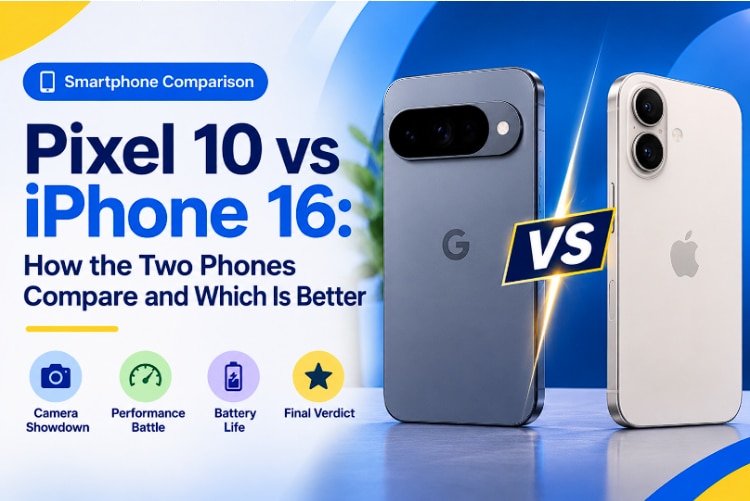
Quick Overview
- iPhone 16 runs Apple's A18 chip with 8GB RAM. Google Pixel 10 runs on the Tensor G5 with 12GB RAM
- Pixel 10 gets a 120Hz display and a 5x optical telephoto lens. iPhone 16 tops out at 60Hz with a 2x optical crop zoom
- The Pixel 10 promises 7 years of OS and security updates, compared with Apple's typical 5 to 6 for iOS. iPhone 16 starts at Rs. 69,900 (128GB), and the Pixel 10 at Rs. 79,999 (256GB), and both now see street prices well below that
- Gemini is built into Pixel 10 by default. iPhone 16 relies on Apple Intelligence, still expanding its feature set
- Comparing the iPhone 16 vs the Google Pixel 10 isn't really about which phone is objectively superior. It's about which ecosystem and trade-offs suit you.
- Both sit in a similar price bracket. Both take genuinely good photos. But the way they achieve this and the trade-offs involved differ more than the spec sheets suggest at first glance.
How Do the Google Pixel 10 and iPhone 16 Compare?
Start with the basics. The iPhone 16 has a 6.1-inch OLED display at 460ppi, capped at a standard 60Hz refresh rate. The Pixel 10 goes slightly larger at 6.3 inches with a smoother 120Hz panel, which shows in scrolling and gaming.
Both are IP68 rated for dust and water resistance. Both use eSIM alongside a physical SIM option. They diverge in software philosophy: iOS stays tightly controlled and consistent, while Android on Pixel leans into customisation, with Google's AI stack front and centre.
Google Pixel 10 vs iPhone 16: Key Differences
|
Specification |
iPhone 16 |
Google Pixel 10 |
|
Chipset |
Apple A18 (6-core CPU) |
Google Tensor G5 |
|
RAM |
8GB |
12GB |
|
Base storage |
128GB |
256GB |
|
Display |
6.1" OLED, 60Hz, 460ppi |
6.3" OLED, 120Hz, 422ppi |
|
Rear camera |
48MP main + 12MP ultra-wide |
48MP main + 13MP ultra-wide + 10.8MP telephoto |
|
Optical zoom |
2x (crop) |
5x |
|
Front camera |
12MP |
10.5MP |
|
Battery |
3,561mAh, up to 22hr video |
4,970mAh, 24+ hr |
|
Charging |
20W+ wired, 25W MagSafe |
30W wired, 15W wireless |
|
Software updates |
iOS updates, typically 5 to 6 years |
7 years OS, security and Pixel Drops |
A Google Pixel 10 vs iPhone 16 comparison on paper favours the Pixel in RAM, base storage, zoom range, and battery capacity. But numbers on a table don't capture everything, especially how each camera system actually processes a photo.
Which Phone Is Better for Photography, Performance and Value?
Neither phone is a clear winner across the board. Where you land depends on what you actually shoot, play, and use daily.
Best for Photography
The Pixel 10's third lens is the key here. A dedicated 10.8MP telephoto with genuine 5x optical zoom, backed by a 20x digital Super Zoom mode, gives you real reach that the iPhone 16 simply doesn't have. The iPhone 16 relies on a high-resolution crop from its main sensor for 2x zoom, which works well up close but falls behind at distance.
Google's computational photography also leans harder into scene-specific processing, which helps in low light and Night Sight shots. Apple's Photonic Engine and Smart HDR 5 are also very capable, and the iPhone often performs better on skin tones and natural colour accuracy. If zoom range matters most, the Pixel 10 wins outright.
Best for Performance and Gaming
The A18 chip has a strong reputation for sustained performance and remains excellent for gaming, video editing, and demanding apps. The Tensor G5 in the Pixel 10 is tuned more for AI workloads and everyday responsiveness than for raw benchmark numbers.
For heavy mobile gaming specifically, iPhone 16 tends to hold a slight edge in frame stability during longer sessions. For general daily use, both are comfortably fast enough that you're unlikely to notice a difference.
Best for AI Features and Software
This is where Pixel 10 pulls ahead clearly. Gemini is built in natively, not bolted on, with Gemini Live, Magic Cue, and Circle to Search working across the entire interface. Seven years of guaranteed OS and security updates also means this phone stays current for far longer than most flagships.
Apple Intelligence is still rolling out features gradually, and while Siri's overhaul is promising, it hasn't matched Gemini's current depth. If AI-assisted daily use is your priority, the Google Pixel 10 is the better choice.
Conclusion: Google Pixel 10 or iPhone 16, Which One Should You Choose?
There's no universally right answer to iPhone 16 vs Google Pixel 10, and that's genuinely fine. Choose the Pixel 10 if you want a longer software lifespan, a proper zoom lens, and AI features that are ready to use. Choose the iPhone 16 if you're already inside Apple's ecosystem, prioritise gaming performance, or simply prefer iOS's consistency.
Both phones justify their price. The iPhone 16 vs Pixel 10 decision ultimately comes down to habits and ecosystems, not a single spec that settles it definitively.
FAQs
Is the iPhone better or the Google Pixel 10?
iPhone 16 suits people already in Apple's ecosystem who value gaming performance and iOS consistency. Pixel 10 suits people who want longer software support, a proper zoom camera, and Gemini built in.
Is Pixel safer than iPhone?
Both take security seriously. Pixel 10 uses a Titan M2 security chip with multi-layer hardware protection and 7 years of security patches. iPhone relies on Apple's tightly controlled ecosystem and Face ID, with similarly strong practical security.
Should I switch from iPhone to Google Pixel?
Worth considering if you want longer update support, a genuine telephoto camera, and deeper AI integration through Gemini. It's less worth it if you use iMessage, FaceTime, or other Apple services daily.
Should I move from Pixel to iPhone?
Makes sense if you prioritise gaming performance, prefer iOS's interface consistency, or need tighter integration with other Apple devices like a Mac or Apple Watch. Otherwise, Pixel's update policy and camera versatility are hard to beat.